Before you book a place in any nationally recognised course, it pays to know whether you qualify to sit it. That is especially true for the TMI 1 course in Adelaide, which is not open enrolment in the way some entry level safety tickets are. It builds on skills and experience you are expected to already have, and turning up without them can mean wasted time, wasted money, and a delayed start on the next step of your traffic management career.
This guide sets out what you typically need before enrolling, why those requirements exist, and what to do if you are not quite there yet.
Why Entry Requirements Exist
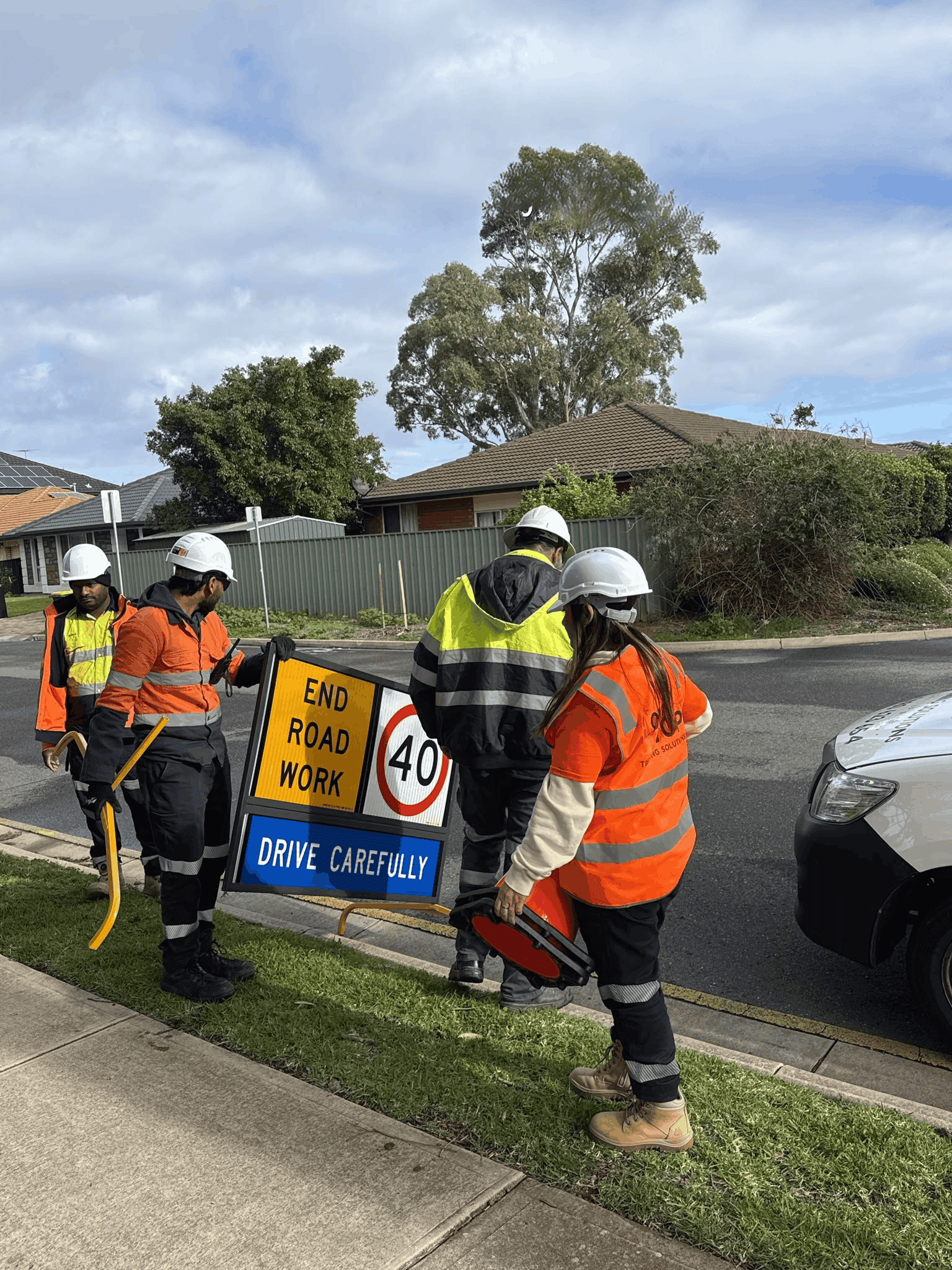
Traffic Management Implementer Level 1 certifies you to put an approved Traffic Management Plan into practice on Category 1 roads, which means urban streets and low volume rural roads. An implementer is not just following instructions at a single control point. They set up the Traffic Guidance Scheme, brief controllers, and make sure the whole work zone matches the approved plan.
That is a real step up in responsibility, so the qualification assumes you already understand the basics of controlling traffic safely. The entry requirements make sure candidates arrive with that foundation, rather than learning the fundamentals and the content of the traffic management implementer course at the same time.
A Current Controller Qualification
The most important requirement is a current traffic controller qualification, commonly the TC1 skill set. The implementer content builds directly on it, so it cannot be skipped. If you completed your traffic control training through One Stop Training Solutions or another registered training organisation, check your Statement of Attainment and your card to confirm it is still current before you enrol.
If your controller qualification has lapsed or was issued under an older framework, do not assume it counts. A quick call to the provider will tell you whether it is accepted or whether a different pathway applies.
Documented Practical Experience
Because the TMI1 is about implementing plans rather than only controlling traffic, providers expect candidates to have genuine time in a traffic management environment. The exact amount of documented experience can vary by provider and by your qualification history, so confirm the figure before you book.
Keep records of your work. A logbook, timesheets, or a letter from your employer showing the type of work you have done and for how long will all help. Workers who have kept their logbook up to date since their controller training usually find this the easiest requirement to satisfy. Those relying on memory often struggle to prove their hours.
Age, Identification and a USI
Candidates are generally expected to be 18 or older. You will need valid photo identification at enrolment, plus a Unique Student Identifier, known as a USI. The USI is a free national reference that links your training records, and every nationally recognised course in Australia requires one. If you completed controller training previously, you already have one, so locate it before enrolment day. If not, you can create one online in a few minutes.
Language, Literacy and Numeracy
Language, literacy and numeracy skills matter because implementers read Traffic Management Plans, interpret diagrams, measure distances, and complete written records. Providers usually screen for this at enrolment. If you have already completed an assessment with the same provider, you may not need to repeat it. If you trained elsewhere, expect a short assessment. It is not designed to trip anyone up, and it helps the trainer support you properly if you need it.
Your Own PPE and Equipment
You are expected to bring your own personal protective equipment, in line with what you would wear on a live site. That generally includes steel capped boots, a broad brimmed hat, eye protection, gloves, long pants, and high visibility clothing that meets the Australian standard. A two way radio is also commonly required for practical components. Check the provider's list before the day so nothing is missing.
Workplace Observations Come After the Classroom
It also helps to know that the qualification does not finish in the classroom. Workplace observations in a real traffic management environment are part of the requirements, so you will need access to suitable sites and a qualified supervisor to observe you. If you are currently employed in the industry, your employer can usually arrange this. If you are not, talk to the provider early about how it can be organised.
What If You Do Not Meet the Requirements?
If you are new to the industry, hold no controller qualification, or lack the experience the standalone pathway expects, the TMI1 on its own is probably not the right starting point. The combined TC1 TMI1 course is designed for new entrants and covers controller and implementer content together, which makes it the more suitable traffic control course in adelaide for most beginners.
If you are close but short on experience, the practical answer is to keep working, keep your logbook accurate, and enrol once you can prove what is required. Enrolling too early rarely saves time.
Your Pre-Enrolment Checklist
Gather these before you contact the provider:
- Your controller Statement of Attainment and card
- Your logbook, timesheets, or an employer letter showing your experience
- Valid photo identification
- Your USI
- Your PPE and two way radio
Confirm Before You Book
Requirements can differ depending on your history, so the most reliable step is a short conversation with One Stop Training Solutions at Royal Park. Tell them what you hold, how long you have worked, and what you want to achieve. They can confirm whether the standalone TMI1 suits you or whether another route makes more sense for any traffic control course in adelaide pathway you are considering.
Final Thoughts
The TMI1 entry requirements are not hurdles for the sake of it. They protect you and the people working under your direction by making sure you arrive ready to take on implementer responsibility. A current controller qualification, documented experience, ID and USI, language and numeracy screening, and your own PPE cover the essentials.
Get those in order, confirm the details with your provider, and your TMI 1 course in Adelaide becomes a smooth next step rather than a stalled enrolment. For anyone planning their traffic control training pathway, knowing these requirements upfront is the quickest way to avoid delays.