Starting a new course always comes with a degree of uncertainty, and a first aid course is no different. Most people walking in on day one have a mixture of curiosity and mild apprehension. Will it be too medical? Too intense? Will the assessment be difficult? Do I need to know anything before I arrive?
The honest answer to most of those questions is no, and understanding what the day actually looks like goes a long way toward replacing that apprehension with straightforward confidence. If you have enrolled in a first aid cpr course in adelaide or are considering doing so, this guide tells you exactly what to expect from the moment you arrive to the moment you walk out with your certification.
Before You Arrive
There is very little preparation required for a first aid course. You do not need to study medical textbooks, memorise anatomy, or have any prior healthcare knowledge. The course is designed from the ground up for people with no background in this area.
What you should do before arriving is read any pre-course materials your training provider has sent you. Some registered training organisations send a brief online component or a short reading to complete before the face-to-face day. This is not usually lengthy or technical, but completing it means you arrive with the foundational context that makes the in-person content easier to engage with.
Wear comfortable clothing. You will be moving around, kneeling on the floor, and practising hands-on skills. Tight or restrictive clothing makes the practical components more awkward than they need to be. Closed-toe shoes are recommended.
Bring a water bottle, a snack, and any reading glasses or other aids you use regularly. The day involves reading, writing, and close-up practical work, so having what you need is worth the minor effort of packing it.
Arrival and Registration
Arrive a few minutes before the scheduled start time. Most first aid training in adelaide providers ask participants to sign in, complete any remaining enrolment paperwork, and have their identification confirmed before the session begins. Getting there a few minutes early means this happens without rushing and without disrupting the group once the trainer has started.
You will typically be in a room with anywhere from six to around fifteen other participants. The group is usually a mix of people from completely different industries and backgrounds, which is part of what makes the day interesting. Construction workers, retail staff, office teams, parents, and sporting coaches all sit in the same room and come away with the same skill set.
The Morning Session — Theory and Context
The first part of the day covers the foundational theory that underpins everything you will practise in the afternoon. Your trainer will begin by introducing the course structure, explaining what the day involves, and confirming what the assessment requires. Most trainers make a point of reassuring the group early that the assessment is designed to be completed successfully, not to catch people out.
The theory content covers the DRSABCD action plan, which is the structured framework for assessing and responding to an emergency. DRSABCD stands for Danger, Response, Send for help, Airway, Breathing, CPR, and Defibrillation. Your trainer will walk through each step clearly and explain why the sequence is structured the way it is.
From there, the morning builds into the broader content of the hltaid011 adelaide qualification. This includes how to recognise and respond to common medical emergencies including cardiac arrest, choking, anaphylaxis, asthma attacks, seizures, severe bleeding, burns, and fractures. Each topic is covered in enough depth to give you a clear, practical understanding of what you are looking at, what decisions you are making, and what actions you need to take.
The theory is presented in plain language. There is no expectation that participants will absorb clinical detail. The goal is practical recognition and appropriate response, not medical diagnosis.
The Afternoon Session — Hands-On Practice
This is where the day becomes genuinely valuable. The afternoon moves from understanding to doing, and it is where most participants go from feeling uncertain to feeling genuinely capable.
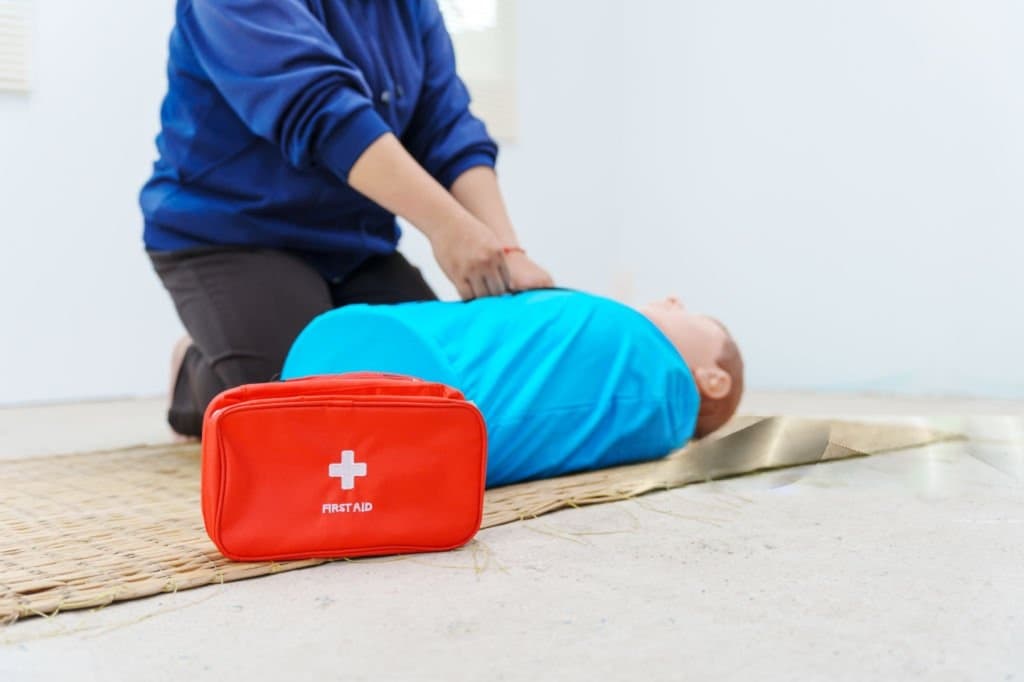
You will practise CPR on manikins, learning the correct hand placement, compression depth, rate, and rhythm. Your trainer will watch your technique, give you immediate feedback, and let you practise until it feels natural rather than mechanical. The physical reality of performing chest compressions surprises many people, which is exactly why doing it in a controlled environment before an actual emergency is so important.
You will practise operating an Automated External Defibrillator, which is the device commonly found in shopping centres, gyms, workplaces, and public buildings that can restore a normal heart rhythm during cardiac arrest. Using one is simpler than most people expect, and practising with a training device removes any hesitation you might otherwise feel about using one in a real situation.
Across the afternoon, you will also work through scenarios covering the other emergency types covered in the morning, applying what you learned to practical situations that your trainer sets up for the group.
For workers in industries with elevated safety requirements, including those who combine their first aid cpr course in adelaide with other compliance training such as traffic control training in Adelaide, the practical afternoon session reflects the kind of real-world readiness that professional environments expect.
The Assessment
At the end of the day, you will complete a practical assessment and a short written component. Neither is designed to be difficult. The practical assessment asks you to demonstrate that you can perform CPR correctly and work through the DRSABCD process competently. The written component confirms your understanding of the key concepts covered across the day.
If you have engaged with the content and participated in the practical sessions, the assessment is a natural extension of what you have been doing rather than a separate high-pressure event. Most participants complete it without significant difficulty.
What You Leave With
Upon successful completion of your assessment, you will receive your nationally recognised Statement of Attainment for hltaid011 adelaide, which certifies you to Provide First Aid. This qualification is valid for three years, with the CPR component requiring annual renewal.
Your certification is recognised across all Australian states and territories and is accepted by employers across every industry that requires first aid compliance.
Final Thoughts
A first aid course day is genuinely engaging, practically focused, and far more accessible than most people expect walking in. By the time you leave, you will have skills that could one day make a real difference to someone's life, and you will have them because you took a single day to learn them properly. That is a straightforward investment with no downside.