If you are thinking about a career in traffic management, one of the first questions is how quickly you can be working. The honest answer is that it depends on you as much as the provider. The classroom component is short, but the qualification is not finished when you leave the room.
This guide walks through each stage in order, with realistic timeframes, so you can plan around work, family and your start date.
The Short Answer
The classroom part of the TC1 TMI1 takes three days. The full pathway to certification, including work placement, observations and final assessment, usually takes several weeks, and sometimes longer. All of it must be completed within six months of your last classroom day.
Most of the variation comes from how quickly you can log your work placement hours, which is the stage you control the most.
Step 1: Enrolment and Prerequisites
Before you attend, you need to sort out some basics. You will need a Unique Student Identifier, known as a USI, valid photo identification and a language, literacy and numeracy check. If you already hold a USI, this takes minutes. If you need to create one, it is free and takes about as long as filling in an online form.
Plan for a few days to a week here, mostly to avoid delays on the day. Choosing a course date is the bigger factor. Intakes are not daily, and the centre has noted a December closure, so check dates early if you want to start before the end of the year.
Step 2: Classroom Training (Three Days)
The combined TC1 TMI1 course runs for three days of face-to-face training at the Royal Park centre. It covers legislation, traffic management plans, stop/slow bat operation, communication and scheme set-up, with practical activities throughout.
This is the most predictable stage. You know the dates, you know the duration, and you leave with a clear picture of what comes next. The key thing to remember is that the clock on your six month window starts from your final day here.
Step 3: The 20-Hour Work Placement
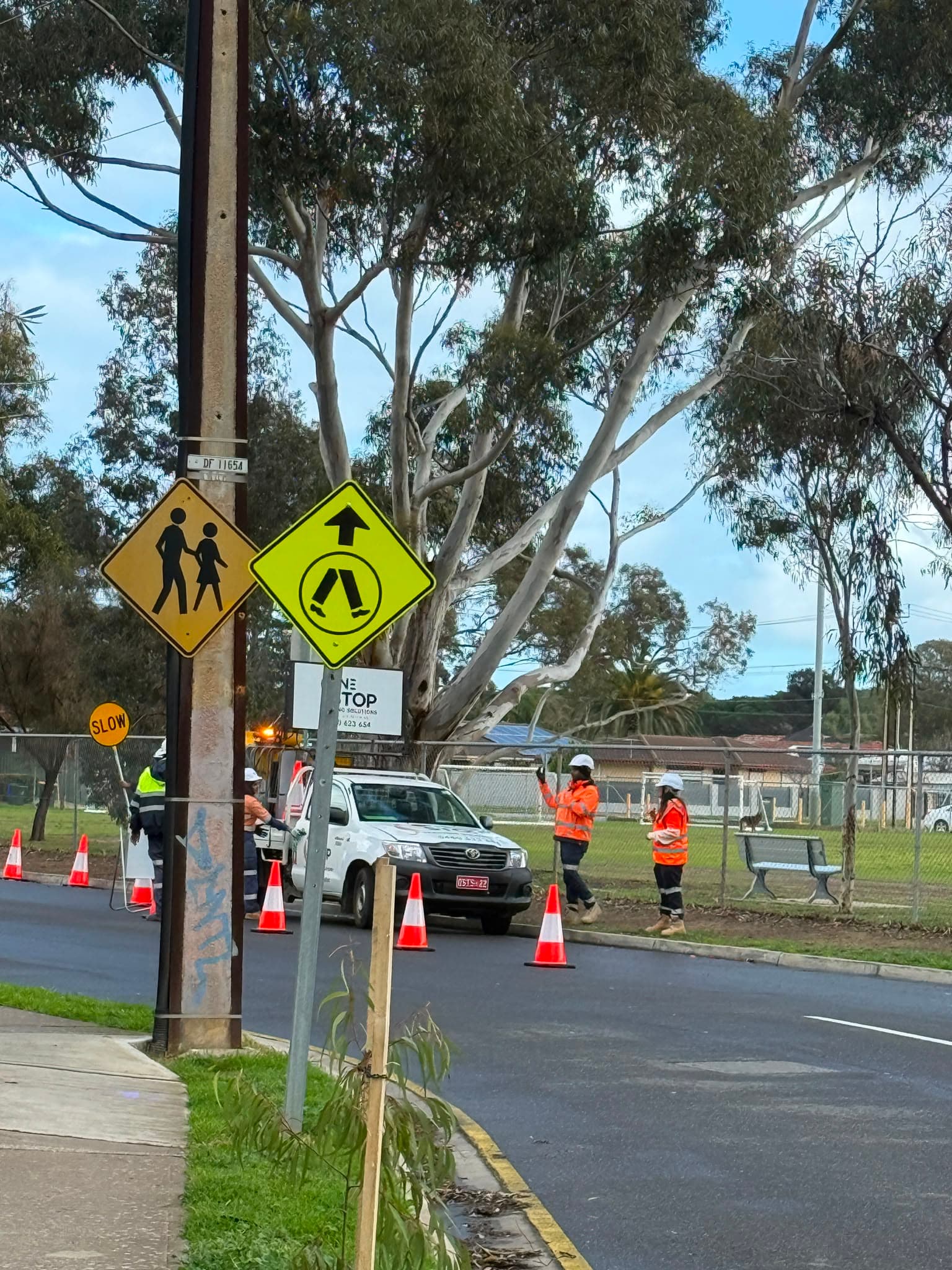
This is where timelines differ most from person to person. You are required to log a minimum of 20 hours performing stop/slow bat or portable traffic control device work on a live road, under a licensed traffic control company.
How long it takes depends entirely on shift availability. Someone who picks up regular shifts can finish in a couple of weeks. Someone working around another job may take a month or more. Placement also depends on finding a company willing to take you on, so if you do not already have an employer, ask your training provider early whether they can help arrange it.
Keep your logbook accurate from your first shift. Filling it in from memory later is a common reason for delays.
Step 4: Workplace Observations
Alongside or after your placement, you will need to be observed implementing traffic management in two separate set-ups by a qualified supervisor. Each one typically takes an hour or two.
These are usually easier to schedule once you are already working shifts, because your supervisor can arrange suitable set-ups during normal work. Many people complete them partway through their placement hours rather than waiting until the end.
Step 5: The Final Assessment
Once your logbook and observations are complete, you can book your final assessment with the provider. These sessions run monthly, so this is a stage where timing can add a few weeks if you just miss a session.
Book as soon as you are eligible. Leaving it until the end of your six month window is risky, because a full session or a missed date can push you past the deadline.
Step 6: Certification and Your TTM Card
After you pass, your Statements of Attainment are issued, and your details are submitted so Austroads can issue your TTM card. The official card takes some weeks to produce. In the meantime, a temporary ID card is issued so you are not stuck waiting before you can work.
Always confirm with your employer that they accept the temporary card for your first shifts.
A Realistic Example Timeline
The following is an illustration only, since everyone's circumstances differ.
Week 1: Sort your USI and ID, enrol and confirm a course date.
Week 2: Attend three days of classroom training.
Weeks 3 to 5: Work your 20 placement hours and complete both observations.
Week 6 or 7: Attend your final assessment at the next monthly session.
Weeks 7 to 12: Work on your temporary card while the official TTM card arrives.
For someone with limited availability or who needs to find a placement, this could stretch to two or three months. Both outcomes sit comfortably inside the six month limit.
What Slows People Down
A few things cause most of the delays:
- Waiting to find a placement until after the classroom days
- Letting the logbook fall behind
- Missing the monthly final assessment session
- Not having a USI or ID ready at enrolment
- Starting the process close to the December closure
All of them are avoidable with a little planning.
How to Move Through It Faster
Ask about placement support before you enrol. Start logging hours immediately after classroom training. Book your final assessment the moment you are eligible. And keep your records tidy throughout, because a clean logbook is the easiest paperwork to approve.
Final Thoughts
A traffic controller course in Adelaide is not a one-day ticket, but it is a short and well-defined pathway. Three days in the classroom, a few weeks on live roads and a monthly final assessment are the main stages, with a temporary card to bridge the wait for your official TTM card.
If you are comparing options for traffic control training in Adelaide, ask each provider how they handle placement and final assessment scheduling, because those are the stages that decide how quickly you start earning. For current dates and enrolment, contact One Stop Training Solutions on 08 7112 0741 and plan your path from classroom to first shift.