Most people never expect to be the one standing over a stranger who has collapsed. When it happens, the pressure to act fast and get it right is enormous, and many people freeze because they are not sure what the correct response is. One of the most common worries is whether to give rescue breaths, especially if you have never been trained.
The short answer is reassuring. If you are untrained or unsure, doing something is far better than doing nothing, and that something is hands-only CPR. This guide explains the difference between the two approaches, when each one applies, and why proper training still matters.
The Short Answer
If someone is unresponsive and not breathing normally, call 000, start chest compressions and keep going until help arrives. If you are not trained, or you are unwilling or unable to give rescue breaths, compression-only CPR is recommended by the Australian Resuscitation Council. It is much better than waiting.
Always follow the advice of the 000 operator. They can guide you through the steps in real time.
What Is Hands-Only CPR?
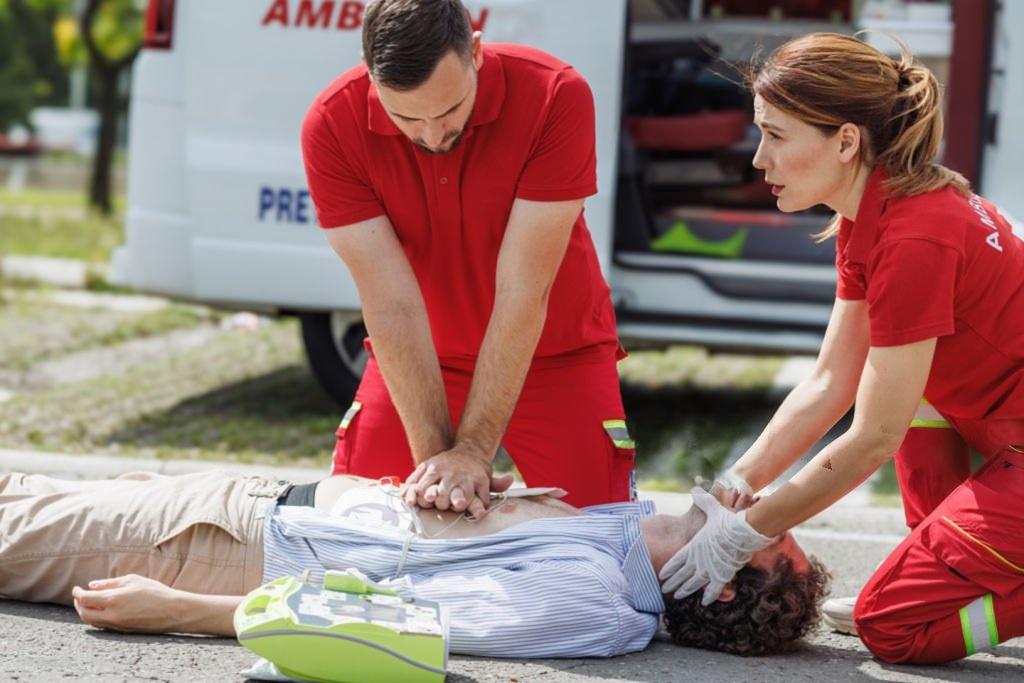
Hands-only CPR means giving continuous chest compressions without rescue breaths. You push hard and fast in the centre of the chest, keeping a steady rhythm until paramedics take over or the person recovers.
It exists for a practical reason. Many bystanders hesitate to start CPR because they are unsure how to give breaths, worry about technique, or are reluctant to put their mouth on a stranger's. Hands-only CPR removes that barrier, which means more people start sooner. In cardiac arrest, every minute without circulation reduces the chance of survival, so starting quickly matters more than doing every step perfectly.
The basic technique is:
- Check for danger, then check the person is unresponsive and not breathing normally.
- Call 000 and put the phone on speaker.
- Place the heel of one hand on the lower half of the breastbone, with the other hand on top.
- Push down firmly, about one third of the depth of the chest, at a steady rate of roughly 100 to 120 compressions per minute.
- Let the chest rise fully between compressions.
- Keep going without stopping unless the person starts breathing normally, help takes over, or you cannot continue.
If an automated external defibrillator is nearby, ask someone to fetch it. Switch it on and follow its spoken instructions. These devices are designed to be used by people with no training.
What Is Full CPR with Rescue Breaths?
Full CPR combines chest compressions with rescue breaths. The usual pattern is 30 compressions followed by two breaths, repeated in cycles. The breaths deliver oxygen to the lungs, which matters because the blood still circulating during CPR carries oxygen that gradually runs out.
Giving breaths involves tilting the head back, lifting the chin to open the airway, pinching the nose and delivering breaths that make the chest visibly rise. It takes practice to do well, which is one reason it is taught in a hands-on course rather than learned from a description.
Full CPR is the recommended approach for people who have been trained and are confident in it.
When Breaths Matter More
Hands-only CPR works well for sudden cardiac arrest in adults, where the person's blood is still carrying oxygen at the moment they collapse. There are situations where breaths become more important.
Children and infants. Cardiac arrest in young people is more often caused by a breathing problem than a heart problem, so oxygen is more critical. If you are trained, give breaths. If you are not, compressions are still better than no action.
Drowning. The underlying problem is a lack of oxygen, so breaths are an important part of resuscitation.
Choking, overdose and other breathing emergencies. When the cause is respiratory, rescue breaths help address it directly.
If you are untrained in any of these situations, start compressions and follow the 000 operator's guidance. Do not hold back because you do not know how to give breaths.
Common Fears That Stop People Acting
Fear of hurting the person. Compressions can cause rib injuries, and that is acceptable. A broken rib can heal. Cardiac arrest without CPR is usually fatal.
Fear of getting it wrong. Imperfect CPR still helps. Slightly shallow or uneven compressions are better than none.
Fear of legal consequences. Australian law is generally supportive of people who give help in good faith in an emergency. If you are concerned, speak to a legal professional, but the consistent public health message is to act.
Fear of disease from rescue breaths. This is one reason compression-only CPR is acceptable for untrained responders and for anyone uncomfortable giving breaths.
Why Training Still Makes a Difference
Hands-only CPR is a safety net for people without training. It does not replace learning the full skill. A trained responder knows how to assess a collapsed person, position them, give effective compressions at the right depth and rate, give breaths where appropriate, and use a defibrillator confidently.
A CPR course in Adelaide takes only a few hours, uses manikins that give you realistic practice, and is built for people with no prior experience. Confidence is the biggest benefit. People who have practised are much more likely to act when it counts.
Many workers in construction and civil roadworks complete CPR training in Adelaide as part of their regular compliance. Those who also complete traffic control training in Adelaide often book both in the same period, since worksites near live traffic carry elevated risk and employers value staff who can respond. Certification needs annual renewal, so it is worth setting a reminder.
What to Remember
- Call 000 first and follow the operator's instructions.
- If untrained, do hands-only CPR: push hard and fast in the centre of the chest.
- If trained, use the 30 compressions to 2 breaths approach.
- For children, infants and drowning, breaths matter more, so give them if you can.
- Use an AED as soon as one is available.
- Do not stop until help arrives or the person recovers.
Final Thoughts
You do not need to be perfect to save a life, and you do not need to be trained to start. If someone collapses and is not breathing normally, calling 000 and starting hands-only CPR gives them a real chance.
If you would like to be ready with the full skill, book a course with a registered training organisation and practise on a manikin before you ever need it. A few hours of training can give you the confidence to act in the moments when it matters most.