
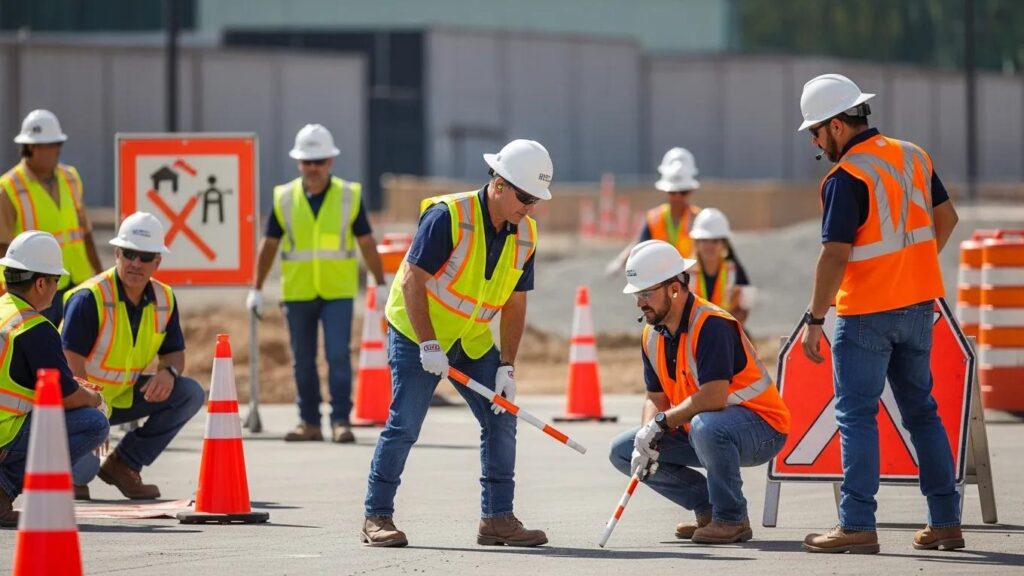
Traffic control training prepares people to work safely at construction sites, roadworks and public events. These courses teach practical traffic‑management skills so participants can control traffic safely and meet workplace safety requirements. With stricter safety expectations across industries, having the right certification matters. This guide explains the certification you need, typical course content, everyday safety guidance, the role of a traffic controller, how accredited qualifications meet Australian standards, and how to enrol.
Certification requirements — what you need to enrol
To join a traffic control course you’ll need to meet a few straightforward requirements. These make sure everyone on the course is ready to learn and to work safely on site.
- Minimum age: You must be at least 16 years old to enrol in traffic control training.
- Language, literacy and numeracy (LLN): Candidates should have LLN skills at Australian Core Skills Framework (ACSF) level 2 or higher.
- Identification: Bring 100 points of Evidence of Identity (EOI) on the day of training.
- Personal protective equipment (PPE): You must supply your own PPE — steel‑capped boots, long pants and a high‑visibility shirt, vest or jacket.
These entry requirements help trainers deliver safe, practical sessions and ensure participants can meet workplace demands.
Course content and learning outcomes
Traffic control courses cover the core skills and knowledge needed for safe traffic management. For example, the TC1/TMI1 course generally includes:
- Safety fundamentals: How traffic control affects site safety and the risks to workers and road users.
- Setting up traffic control devices: How to set up, monitor and pack down signs, cones and other devices in line with Traffic Guidance Schemes (TGS) and Traffic Management Plans (TMP).
- Using communication equipment: Practical use of two‑way radios and routine site checks for hazards and risks.
These outcomes make sure participants can confidently apply what they learn in real work situations.
Safety guidance
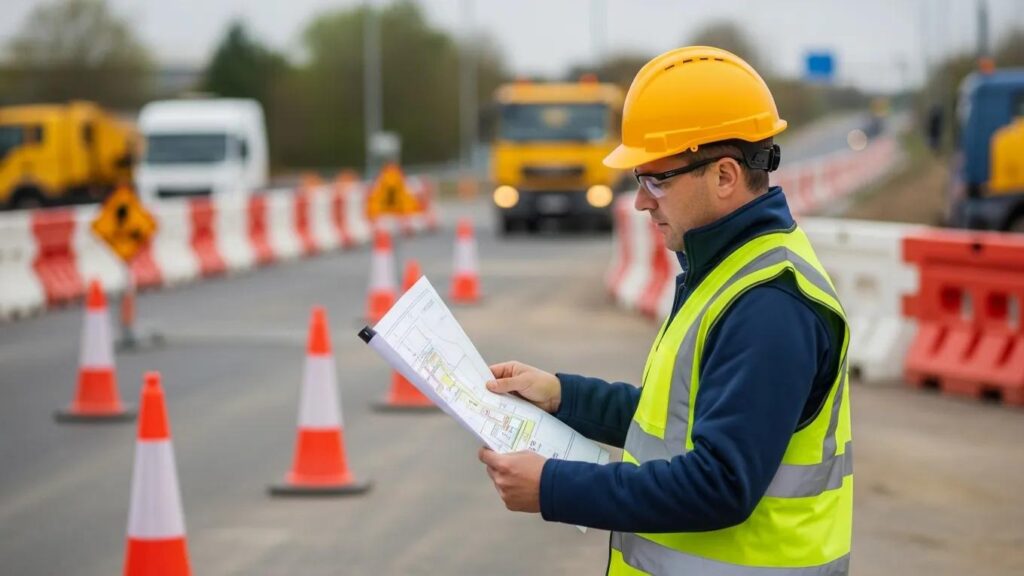
Work health and safety (WHS) compliance is central to traffic control training. Courses focus on practical steps to reduce risk in active work zones and meet regulatory requirements. Key safety areas include:
- Risk assessment and control: Identifying hazards, assessing risk and applying safe work procedures on site.
- Emergency planning: Practical drills and procedures so participants can respond quickly and safely to incidents.
By prioritising safety, training helps create safer environments for workers and road users alike.
Why traffic management training matters
Good traffic management training protects people, keeps projects moving and helps businesses meet their legal obligations.
- Worker and road‑user safety: Well‑trained traffic controllers reduce the chance of accidents in active work zones.
- Regulatory compliance: Accredited training helps sites meet national and state requirements for safe traffic control.
- Career advantages: Completing TC1/TMI1 gives you an entry point into the industry and opens the door to further training and roles.
These benefits show why accredited training is a worthwhile investment for anyone entering traffic control.
What traffic control training covers and why certification matters
Traffic control training teaches the practical skills needed to manage traffic and keep people safe. Certification proves you’ve completed approved training and are competent to carry out traffic control duties. If you want to explore course options and content, check our course information.
- Practical skills: Training covers proven techniques and on‑site practice to prepare you for real work.
- Safety and compliance: A recognised certificate shows you understand industry standards and safe practices.
- Job readiness: With TC1/TMI1 certification you’ll be ready for entry‑level traffic control roles and further upskilling.
Industry regulators recognise these qualifications, so certification is a valued credential for employers.
Understanding the traffic controller’s role in workplace safety
Traffic controllers have a hands‑on role in keeping worksites safe. Typical responsibilities include:
- Managing traffic devices: Setting up, monitoring and packing down signs, cones and other control devices.
- On‑site risk checks and communication: Spotting unexpected hazards and communicating them clearly to the team.
- Emergency coordination: Using effective communication to manage incidents and protect site safety.
Quality training and certified providers make sure traffic controllers understand these responsibilities and meet industry standards — see our training solutions for details.
Traffic controller health and safety in road works
Traffic controllers face unique health and safety risks in road‑work environments. Their role is to create a safe workspace for crews and the public by applying health and safety principles and following industry standards and codes of conduct. This excerpt considers the health and safety issues that affect traffic controllers themselves.
Investigation into traffic controller health and safety at road works in Queensland, 2013
How accredited certification meets Australian standards
Accredited traffic control courses are designed to align with Australian national and state standards so participants are prepared for workplace requirements.
- Regulatory compliance: Training content and assessment meet the legal and industry requirements relevant to your state or territory.
- Course completion rules: Typical requirements include being at least 16 and meeting LLN expectations to qualify for certification.
- Wide recognition: On successful completion you’ll receive certification that allows you to work on Traffic Guidance Schemes recognised by industry regulators.
This alignment gives employers confidence that certified trainees understand safe traffic management practices.
Key requirements and typical costs
When you’re planning to do traffic control training, it helps to understand the common requirements and what to budget for.
- Licence and regulatory checks: Make sure you meet any licence or state‑specific requirements before you enrol.
- Eligibility: Review age, LLN and ID requirements so you can enrol without delay.
- Costs: Course fees vary by provider — contact your chosen training organisation for current pricing and available dates.
Knowing these details ahead of time makes enrolment straightforward.
How practical safety training is delivered
Practical, hands‑on training is a key part of traffic control courses so participants can demonstrate competence under real‑world conditions.
- Delivery and duration: Courses are usually delivered over a short block of face‑to‑face sessions to cover both theory and practical skills.
- Assessment: You’ll complete practical tasks using full‑scale devices and be assessed on safe setup, operation and pack‑down.
- Safety planning: Course work includes emergency response planning and on‑site safety practices to prepare you for live conditions.
These practical elements make training relevant and directly applicable on site.
How to enrol and what certification you’ll receive
Enrolling is simple — contact the training provider to book, make sure you have ID and meet the prerequisites, and attend the scheduled sessions.
- Get in touch: Contact the training team to check course dates and availability.
- Prepare your ID: Bring 100 points of identification to the training day.
- Meet prerequisites: Ensure you meet the prerequisites for TC1/TMI1 (and TC2/TMI2 if you plan to progress).
On successful completion you’ll receive nationally recognised certification that supports employment in traffic control roles.
Certification recognition and career opportunities
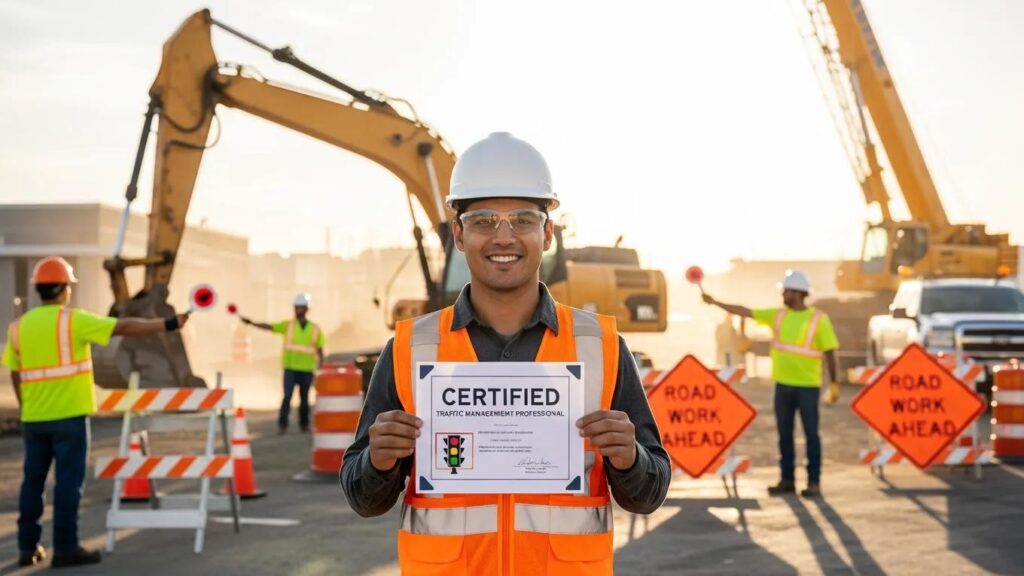
Certified traffic controllers are in demand across construction, roadworks and event management. Certification provides clear career pathways.
- Recognised qualifications: Certificates are recognised by industry regulators and many employers.
- Job opportunities: Roles include traffic controller positions on construction sites, road maintenance and public events.
- Progression: Completing TC2/TMI2 and further units lets you manage more complex traffic setups and take on higher responsibility.
Accredited certification is a practical step toward a safe, stable career in traffic management.
Conclusion
Traffic control training gives beginners the skills and confidence to work safely in roadworks, construction and public event environments. By completing accredited training, participants gain recognised certification, practical experience and a clear pathway into the industry. Whether you’re starting your career or looking to expand your opportunities, choosing a quality traffic control course in Adelaide helps you meet workplace standards, improve safety awareness and prepare for real on-site responsibilities. With strong demand for qualified traffic controllers, certified training is a valuable investment in your future.